logo + link

Saltford Environment Group
  towards a sustainable future for our village

image

  SEG Home > News List > 2024 News Archive


2024 News Archive

The latest stories are on our home page.

As this is an archive some older links may no longer connect due to changes in web page URL addresses etc.

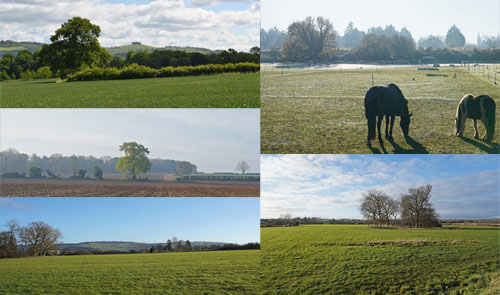
montage

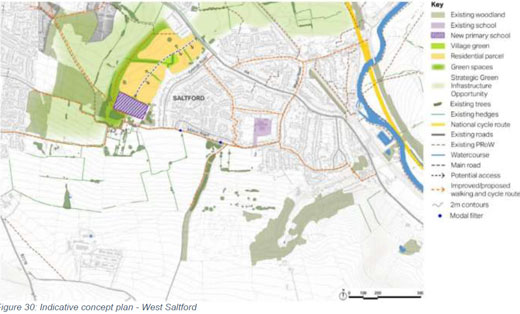
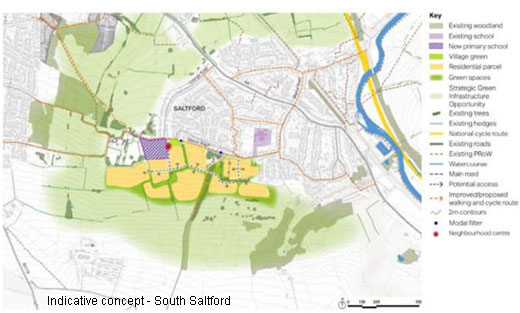
Important work for SEG in 2024 has been the defence of Saltford's Green Belt from development in the next B&NES Local Plan (2022-2042) - in particular the west and south of Saltford pictured here.

Click on each story link or scroll down the page (most recent appears first):-

December 2024

Local Election in Saltford, 17th January

SEG highlights folly of short-term approach to new housing

Golden rules with 'brownfield first' approach for building on the Green Belt as Government launches revised planning policy

November 2024

West Lancashire takes same line as Saltford on protecting farmland

SPC keeping up the pressure on defending the Green Belt

BaNES to re-set its new Local Plan

October 2024

Vertebrate wildlife population declined by 73% in just 50 years

State of Natural Capital Report for England 2024

Keynsham Recycling Centre Q&A

Big Butterfly Count 2024 results reveal lowest numbers on record

Artificial Light at Night (ALAN) and Moths

New Government housing target for BaNES 'unrealistic', says BaNES

There are more dwellings per head now than 50 years ago

September 2024

Saltford Calendar 2025

SPC seeks stewardship approach to land use planning (NPPF reforms)

BaNES annual Climate and Nature Progress Report reveals good progress on cutting CO2 emissions

August 2024

Storm Overflows Map

Protect the Green Belt to help ensure self-sufficiency in food doesn't drop further

Coffee Morning - Friday 18th October

Fairtrade Fortnight 2024

July 2024

Big Butterfly Count (12 Jul - 4 Aug)

Landscape and Heritage Sensitivity Assessment of Saltford South of the A4

The astonishing life of Saltford's Admiral Kelly

June 2024

Dried Up Futures - new report from Population Matters

Saltford's history at the Saltford Festival (15 June)

Parish Walk of Saltford South footpaths (12 June)

May 2024

SPC raises concerns with BaNES Council about Local Plan options consultation

Saltford Festival 7-16 June - Brochure

Significant response from Saltford to Local Plan options

Walk This May

Festival of Nature, Bristol & Bath, 1-9 June

April 2024

Over 7,500 comments on proposed Local Plan options

Earth Day 2024: Planet vs. Plastics

2024 Big Garden Birdwatch results

Making Saltford a haven for pollinators

March 2024

Recent promises to protect the Green Belt and villages in BaNES

SPC meets local MP to discuss need to protect Saltford's Green Belt

SEG asks BaNES to comply with Government policy on the Green Belt! (Local Plan consultation response)

SPC resolves its response to BaNES Local Plan Options Consultation

Saltford's Green Belt is an Area of Great Landscape Value, says SPC

Map reveals potential urban sprawl from Bristol to Saltford & further information (incl. "Should Saltford take more housing..?")

Febuary 2024

Annual Saltford Dawn Chorus Walk, 28th April

Objection reasons for 1,300 new houses in Saltford's Green Belt!

B&NES Council launches Local Plan Options Consultation

SPC takes firm line responding to B&NES Council on landscape designation request

January 2024

Public statement from SEG on the Local Plan options totalling 1,300 houses in Saltford's Green Belt

Shock at 1,300 houses on Saltford's Green Belt in Local Plan "options"

Local Plan: SPC reaffirms its Saltford South landscape designation bid

Big Garden Birdwatch 26 - 28 Jan


News stories start here (most recent appears first):-


Local Election in Saltford, 17th January

December 2024

BaNES Council has announced that there will be a local election in the Saltford Ward on 17th January to fill the Saltford Ward Councillor vacancy on BaNES Council. This follows the resignation of Cllr Alison Streatfield-James to fill a senior national and non-political role for the Financial Conduct Authority (FCA). SEG is grateful to Alison for her work on Saltford's behalf since her election in May 2023 and wishes her well for the future.

The deadline for nominations to be sent to BaNES Council to stand for this election was 16th December 2024. These are the 6 candidates standing for election:

  BUSBY, Andrew David (Conservative Party);
  CONDICK, Daniel Patrick (Reform UK);
  GIDDINS, Jane Emma (Labour Party);
  PIROOZ, Hossein (Liberal Democrats);
  THORNTON, Luanne (Green Party);
  WARREN, Christopher John (Independent).

More information about the candidates and the local election itself can be found on the BaNES website from this link >>

The two most important issues for our new Ward Councillor will concern

   (i) the threat of development on Saltford's Green Belt in the next (draft) Local Plan; and

   (ii) traffic congestion in Saltford and Keynsham that would become considerably worse at peak times if WECA implements its proposals for a bus lane on the Keysham bypass.

SEG is contacting the candidates to seek their agreement that if elected they will support the objective of protecting the Green Belt around Saltford in the next Local Plan and resist the bus lane proposals from WECA.

SEG reminds members and residents that SEG is independent and politically neutral on national and local political matters and will work with all elected local Councillors and the local MP towards a better, more sustainable future for the village of Saltford.

Return to top of page


SEG highlights folly of short-term approach to new housing

photograph

December 2024

Most would agree that we need more affordable homes and in the right places. However, the Government's short-term approach to new housing and higher housing targets for Local Planning Authorities to enable it to meet its questionable aim to build 1.5 million new houses by the end of the current Parliament, has the potential to do massive damage to the nation's ability to feed itself in the future. The outcome would be huge economic upheaval with 'food poverty' becoming a reality for increasing numbers of citizens as food prices rise in response to rising demand but depleting production.

Losing agricultural land and land that provides ecosystem support for food production (e.g. pollinator habitat) is a short-term decision with medium to long term consequences for our food security that can't be reversed.

Here are some compelling reasons to protect this country's farmland and natural or semi-natural habitats that support our ecosystems and food production:-

  • The UK cannot feed itself now, 40% of our net food requirement is imported each year (Defra data).
  • Climate change is already reducing productivity for large areas of food production and causing crop failures, a rising world population, and conflict means that in the near future the UK will not be able rely on other nations to feed us at current rates.
  • Food systems depend on a reliable source of freshwater. Half the world's population already faces water scarcity, and that number is set to rise as the climate crisis worsens, according to a report from the Global Commission on the Economics of Water published on 17 October 2024 (watercommission.org).
  • At present, over half of the world's food production comes from areas experiencing unstable trends in water availability. More than half the world's food production will be at risk of failure within the next 25 years (by 2050) as a rapidly accelerating water crisis grips the planet, unless urgent action is taken to conserve water resources and end the destruction of the ecosystems on which our fresh water depends (watercommission.org, 17 October 2024).

The following illustrates that rather than a housing shortage, the issue facing the nation is the need to make better use of the housing we have, or that housing developments that already have planning permission to be built are not being built:-

  • In 1971 there was almost one dwelling for every 3 people in the country. Today, there is about one dwelling for every 2.25 people, meaning we actually have more homes per capita right now than we did 50 years ago (ONS Data - CPRE, October 2024).
  • There are almost 700,000 empty and unfurnished homes in England. Of those, 261,471 are classed as "long-term empty", meaning no-one has lived there for six months or more. (Ministry of Housing, Communities and Local Government data, 2024 - MHCLG link on gov.uk)
  • The UK's birth rate of 1.44 children/woman (ONS data, 2024) is well below population replacement level (2.1) so demand is shrinking but for net inward migration, e.g. +906,000 in 12 months to June 2023 (ONS data update 28.11.2024).
  • England has enough brownfield land for 1.2 million new homes (CPRE, December 2022).
  • According to "Planning Portal Weekly News", the Market Index Report shows that over one million homes with planning permission remain unbuilt (www.planningportal.co.uk 5.12.2024).

The situation for Saltford and Keynsham proves that this part of Bath and NE Somerset has taken more than enough housing, indeed more than local roads can take:-

  • New and existing employment opportunities are near brownfield land, not the Green Belt.
  • Traffic congestion results in economic loss and lowers the quality of life for residents. The cumulative effect of new housing in Keynsham and South Gloucestershire etc. is already causing serious traffic congestion during morning and early evening peak times not just in Keynsham, but through Saltford. Our local roads can't take new housing developments.
  • Facilitated by new housing developments, Saltford's population has grown by 114% since 1951 (Census data). It has exceeded its share of new housing and local roads struggle to cope with peak time traffic volumes; any new developments would represent over-development and damage much more than Saltford's rural village status.

For our ecology, health and well-being we should be protecting the Green Belt, not destroying it:-

  • There has been a 73% average decline in monitored vertebrate wildlife populations (mammals, birds, amphibians, reptiles and fish) worldwide in the last 50 years (WWF's Living Planet Report, October 2024).
  • The UK is one of the world's most nature-depleted countries being in the bottom 10% globally and last among the G7 group of nations - Natural History Museum's Biodiversity Trends Explorer report (October 2021).
  • Building on open countryside in the Green Belt reduces the quality of life for rural and city dwellers. The countryside is important for our mental and physical well-being. We should protect the Green Belt not just for rural residents and for wildlife, but for those who live in local towns and cities and appreciate being able to get out to open countryside relatively quickly.

We need political leaders that can think past the next election, leaders that actually recognise the importance of food security, the essential need to retain farming land and natural habitats, and recognise that the nation needs to get a grip of making the planning system deliver houses that are needed, in the right places, and in ways that support health and well-being whilst protecting the land that feeds us.

The economy is a wholly owned subsidiary of the environment, not the other way round... - Gaylord Nelson (1916-2005)

Return to top of page


Golden rules with 'brownfield first' approach for building on the Green Belt as Government launches revised planning policy

December 2024

On 12 December 2024 the Government announced new mandatory higher housing targets for councils across the country and planning reform (the launch of the revised National Planning Policy Framework NPPF) and "lower quality 'grey belt' land defined in national planning policy for the first time, with tough new 'golden rules' on development to guarantee affordable housing, local services and green spaces".

Under new planning rules, updated via the NPPF (December 2024):

  • Areas with the highest unaffordability for housing and greatest potential for growth will see housebuilding targets increase, while stronger action will ensure councils adopt up-to-date local plans or develop new plans that work for their communities.
  • A new common-sense approach will be introduced to the greenbelt. While remaining committed to a brownfield first approach, the updated NPPF will require councils to review their greenbelt boundaries to meet targets, identifying and prioritising lower quality 'grey belt' land.
  • Any development on greenbelt must meet strict requirements, via the new 'golden rules', which require developers to provide the necessary infrastructure for local communities, such as nurseries, GP surgeries and transport, as well as a premium level of social and affordable housing.

Deputy Prime Minister and Secretary of State for Housing, Angela Rayner, said:

   Reflecting our commitment to the plan-led system, meaning where and how new development is built through local plans, ministers will provide local authorities with three months in which to progress local plans that are currently in development, subject to conditions that catch those which significantly undershoot the new targets.

   But the government is introducing a new requirement that where plans based on old targets are still in place from July 2026, councils will need to provide for an extra year's supply of homes in their pipeline - six years instead of five.

   Where they do not, the strengthened presumption in favour of sustainable development would apply alongside the existing safeguards in national policy around provision of affordable housing, design quality, and sustainability of location.

   Brownfield land must continue to be the first port of call for any new development and the default answer when asked to build on brownfield should always be 'yes'. The government is also exploring further action to support and expedite the development of brownfield land in urban areas through 'brownfield passports' with more details to be set out next year.

On the NPPF consultation, Deputy PM Angela Rayner said:

   The new annual housing targets continue to total an ambitious 370,000 across England, with higher mandatory targets in those places facing the most acute affordability.

The Golden rules for this statement from the Government were summarised as:

  • Brownfield first.
  • Grey belt second.
  • Affordable homes.
  • Boost public services and infrastructure.
  • Improve genuine green spaces.

NOTE: Grey Belt is defined in the NPPF as land in the Green Belt comprising previously developed land and/or any other land that, in either case, does not strongly contribute to any of 3 specific Green Belt purposes, namely (a), (b), or (d) - i.e. (a) to check the unrestricted sprawl of large built-up areas, (b) to prevent neighbouring towns merging into one another, and (d) to preserve the setting and special character of historic towns.

FURTHER INFORMATION
Relevant link (to gov.uk): Planning overhaul to reach 1.5m new homes.

Return to top of page


West Lancashire takes same line as Saltford on protecting farmland

November 2024

photograph

In its response to the Government's consultation on proposed changes to the National Planning Policy Framework (NPPF) and the wider planning system, West Lancashire Borough Council has submitted its case, similar to that submitted by Saltford Parish Council, on the need to protect farmland.

West Lancashire Borough Council welcomed some proposals, but raised concerns over proposals relating to housing needs, and stressed the importance of the protection of agricultural land from built development and securing funding for essential infrastructure.

Councillor Gareth Dowling, Deputy Leader and Lead Member for Planning said:

   "As a Council, we recognise the importance of providing homes for our residents and space for businesses to grow, however this must not be at the cost of irreversible environmental damage, particularly to our regional and nationally important farming land."

West Lancashire Borough Council's detailed response included the following point:-

   "...with the impacts of climate change and the increased demand for locally sourced produce, demands on the quality and availability of agricultural land is most likely to increase. The protection of best and most versatile agricultural land is an important consideration and there is no good reason why this should not be explicitly referenced as a factor to be taken into account by LPAs [Local Planning Authorities] when determining which sites should come forward for development."

SEG reminds members that in SPC's response to the NPPF consultation, our Parish Council called for a "land stewardship approach" so that planning the provision of land for new housing will improve, not reduce, the nation's future food security and that strongly support ecological recovery without a negative outcome for the open green spaces that are so important to the health and well-being local communities.

Other points SPC made included the following:-

  • planning (for new developments) should take account of food security and supporting ecological recovery;
  • any decisions for land to be taken out of the Green Belt to allow development, must pass a vigorous test over and above "very special circumstances" (clear examples of which should be given in the updated NPPF). The test should include that grey belt/PDL must have been previously developed over a long period of time (at least 15 years) and the land in question should not be providing an important ecological function or meet any of the NPPF's purposes of the Green Belt as well as "to protect agricultural land and/or eco-systems that help underpin the UK's food security".

Following the autumn's consultation, the new NPPF is due to be published by the Government in late 2024/early 2025.

SPC's full response and an Executive Summary on the NPPF proposals can be found on the SPC website from this link >>

West Lancashire Borough Council's press release on its response (with links to the full response) can be found from this link >>

Return to top of page


SPC keeping up the pressure on defending the Green Belt

November 2024

photograph

Saltford Parish Council has remained active defending Saltford's Green Belt during November. As reported on its "Protecting Saltford's Green Belt" webpage that is linked from SPC's News page, members of SPC's Planning Policy Working Group met with BaNES Council Planning Officers on 7th November and our local MP, Dan Norris, on 8th November.

In summary SPC welcomed the news from BaNES Council's Senior Planning Officers on 7th November that further to SPC's request for landscape designation at 'Saltford South of the A4', a report had been commissioned from a landscape architect consultancy to address matters raised in SPC's bid and also to assess BaNES Council's landscape designation methodology. Later the same day, SPC also attended a briefing for Parish and Town Councils from BaNES Planning Policy officers about BaNES Council's work on re-setting of its Local Plan process (due to the revised timetable for the Local Plan, as resolved by BaNES Council's cabinet at its 12 September meeting).

SPC is due to meet with BaNES Council's Planning Policy officers again in early 2025 to discuss its bid to enhance protection for Green Belt at Saltford South, and welcomed that the report from the landscape architect consultancy would be published alongside the next Local Plan consultation due late summer 2025.

SPC also met with Dan Norris MP at Saltford Hall on 8th November to request support for its response to the NPPF consultation. SPC received guidance that a regional approach would be required and as such SPC should approach the next West of England Combined Authority Mayor in May 2025.

There is a helpful timeline on SPC's "Protecting Saltford's Green Belt" webpage that sets out the numerous actions taken by SPC in making representations to BaNES Council and also a list of key documents produced by SPC that can be downloaded. These are easy to find on SPC's Protecting Saltford's Green Belt webpage.

Return to top of page


BaNES to re-set its new Local Plan

November 2024

Due to the serious implications for BaNES Council's next Local Plan for the period 2022-2042, in particular new mandatory housing targets, which would see a significant uplift in the housing numbers that BaNES needs to plan for, BaNES Council has had to re-set the process for producing its new Local Plan.

As SEG reported in October, new mandatory housing targets are expected to increase the target for BaNES from the current 717 houses per annum to 1,466 per annum. The purpose of this increase is said by Government to be to address historic shortfalls in housing delivery and meeting housing needs.

To enable BaNES Council to consult on further options for development to enable it to meet the higher targets, it will re-set the timetable for delivering the new Local Plan, delaying its completion by about 12 months. Another round of consultations on further options for new housing developments are anticipated around late summer/early autumn 2025 with a draft Local Plan to be launched in early 2026 and the Public Examination late 2026/early 2027.

Existing options consulted on in 2024 will be carried forward by BaNES for consideration in drafting the new Local Plan and will not, therefore, be consulted upon again.

The higher housing numbers for the BaNES area is likely to increase the pressure on Saltford's Green Belt. That is despite the lack of employment opportunities in a village like Saltford.

Common sense suggests that the actual need for affordable housing should be delivered close to centres of employment like Bristol and Bath, thus reducing the need for commuter travel (that congests roads, raises carbon emissions and increases local air pollution).

Likewise, building new affordable homes closer to employment in our cities on brownfield sites or through the re-purposing of former retail sites, helps avoid a further devastating loss of the region's valuable Green Belt that is so important not just for wildlife and food production, but for the health and well-being of city and rural dwellers alike.

SEG will be discussing this issue at its November AGM (members have been sent an AGM invitation email).

FURTHER INFORMATION

See also our October news story "New Government housing target for BaNES 'unrealistic', says BaNES" which provides further comment from SEG on this important issue.

Return to top of page


Vertebrate wildlife population declined by 73% in just 50 years

October 2024

photograph
Can we live as one with nature?

The Living Planet Index (LPI) from by the WWF, includes almost 35,000 population trends of 5,495 observed species from 1970-2020. The LPI shows an average 73% decline in monitored vertebrate wildlife populations (mammals, birds, amphibians, reptiles and fish). On 10th October 2024 the WWF published the LPI's latest report as the Living Planet Report 2024

Freshwater populations have suffered the heaviest declines, falling by 85%, followed by terrestrial (69%) and marine populations (56%).

The percentage change in the index reflects the average proportional change in monitored animal population sizes at sites around the world, not the number of individual animals lost, nor the number of populations lost.

By monitoring changes in the size of species populations over time, the LPI is an early warning indicator for extinction risk and helps us understand the health of ecosystems.

When a population falls below a certain level, that species may not be able to perform its usual role within the ecosystem - whether that's seed dispersal, pollination, grazing, nutrient cycling or the many other processes that keep ecosystems functioning. Stable populations over the long term provide resilience against disturbances like disease and extreme weather events; a decline in populations, as shown in the global LPI, decreases resilience and threatens the functioning of the ecosystem. This in turn undermines the benefits that ecosystems provide to people from food, clean water and carbon storage for a stable climate to the broader contributions that nature makes to our cultural, social and spiritual well-being.

The Living Planet Report is an important alarm call that highlights not just the problems but also the achievable solutions to stabilise the climate, protect and restore nature, and help our farmers produce plenty of healthy, affordable food without harming our environment (see further down this news story and the petition you can sign too).

Food production is one of the main drivers of nature's decline: it uses 40% of all habitable land, is the leading cause of habitat loss, accounts for 70% of water use and is responsible for over a quarter of greenhouse gas emissions. The hidden costs of ill health and environmental degradation in the current food system amount to US$10-15 trillion annually, representing 12% of global GDP in 2020. Paradoxically, our food system is undermining our ability to feed humanity now and into the future.

The way we produce and consume energy is the principal driver of climate change, with increasingly severe impacts on people and ecosystems. We know we must rapidly transition away from fossil fuels to renewable energy to cut greenhouse emissions in half by 2030 and keep 1.5oC within reach. The energy transition must be fast, green and fair, putting people and nature at its heart.

Tanya Steele, Chief Executive of WWF-UK said:

"A 73% decline in wildlife population sizes over the past 50 years is shocking and must be a wake-up call. We need to take urgent action to protect and restore nature both in the UK and around the world."

This is not just about risks to wildlife. It's about our own health too, our food supply, our whole future.

A UNIQUE SOLUTION (+ PETITION TO UK GOVERNMENT)

The Living Planet Report states that the good news is, we know what to do. We can stabilise the climate, protect and restore nature, and help our farmers produce plenty of healthy, affordable food without harming our environment. We know it's possible to do all this, but not the way the UK government works at the moment. Right now, we're failing on all three fronts.

That is why WWF is urgently calling for a new law at Westminster - the Living Planet Act. It will mean the UK government has to take 'joined-up' action to stop the climate crisis, look after nature, and make sure everyone has better access to healthy, affordable food, now and in the future. Instead of treating nature, the climate and food as three completely separate or conflicting issues, they would all be seen as important pieces of the same puzzle.

The WWF UK's Living Planet Act petition can be found at this link.

The Living Planet Report 2024 is the 15th edition of WWF's biennial flagship publication. The full report and summary versions of the report are available from this link.

Return to top of page


State of Natural Capital Report for England 2024

October 2024

photograph
Longwood, part of Saltford's "Natural Capital" in the Green Belt, an Area of Great Landscape Value

On 9th October 2024 Natural England published its "State of Natural Capital Report for England 2024 - Risks to nature and why it matters". Key points and findings in the report that are relevant to protecting Green Belt land like Saltford's Green Belt, declared an Area of Great Landscape Value by Saltford Parish Council in March 2024, were:-

   Natural capital is the parts of nature that provide benefits to people. We depend on it for the air we breathe, the water we drink and the food we eat. It boosts our health and wellbeing.

   It captures and stores carbon and has a vital role to play in helping us adapt to the impacts of climate change.

   Natural capital is also an economic concept. It considers nature as a stock of assets, which we have to invest in. Ecosystem assets need to be in a healthy state to support the benefits society relies on.

All of our ecosystem assets, and almost all the benefits they provide, are at high or medium-high risk:

  • Assets at high risk: marine; coastal margins; freshwaters and wetlands; mountains moorlands and heaths; woodlands.
  • Assets at medium-high risk: semi-natural grasslands; enclosed farmland; urban.
  • Benefits at high risk: timber and other wood products; produce from the sea; plentiful water; reared animals and their outputs; clean water; erosion control; flood protection; thriving plants and wildlife; cultural benefits.
  • Benefits at medium-high risk: cultivated crops; clean air; urban cooling; noise regulation; pollination; pest and disease control.

Key messages from the report

   Due to the state of England's natural capital, society and the economy face substantial risks. Nature is at risk. This puts the benefits it provides at risk. For example, degraded peatlands and damaged seabeds can release huge carbon stores. Declines in nature make the impacts of climate change worse, including flooding and soaring urban temperatures. Loss of pollinators is a threat to the crops which depend on them.

   These risks need to be tackled head-on by decision makers. Society has taken nature and its benefits for granted. This results in decisions that cause damage to nature and increases risks for the economy and society. Many seemingly unrelated decisions impact on nature. We need to make natural capital central to decision making. Even where the decisions aren't specifically about natural capital.

   We need to invest in natural capital now, to reduce risks and reap rewards. Acting quickly to prevent and address the degradation of nature makes economic sense. It secures and enhances the benefits we depend on, now and for the future, meaning it will be cheaper and more effective in the long run.

Priority opportunities to bring natural capital into decision-making included:

  • Put natural capital at the heart of land- and sea-use planning.
  • Promote private and public investment in large-scale ecosystem creation and restoration.

FURTHER INFORMATION

Natural England's "State of Natural Capital Report for England 2024 - Risks to nature and why it matters" can be downloaded from this link.

Return to top of page


Keynsham Recycling Centre Q&A

October 2024

A visit to the Keynsham Recycling Centre on 10th September by members of the Keynsham Area Forum (comprising representatives from organisations in the Keynsham area) ended with an interesting Q&A session which may be of interest to SEG's members.

Q: Is it still not possible to recycle black plastic here?

A: No - The lightbox scanner cannot detect this type.

Q: Does this replace the operation at Avonmouth?

A: No - we are part of a Local Authority Network with Bristol and North Somerset. This means we can guarantee refuse (black bag waste) tonnage to send to Avonmouth to get a good price. (At Avonmouth, waste is used to create electricity).

Q: Do you have a weighbridge here?

A: We have three. They are self service and use ANPR for in bound, out bound and trade waste. They are not public.

Q: The depots advertise their own recycling rates e.g. Welton says 79% of items deposited there are recycled. Are the figures for the individual depots or overall for BANES?

A: It's the individual depots. That is the correct figure for Welton. Overall for BANES, the domestic recycling rates are about 58%. Compared to other authorities, this is good but more items could be recycled.

Q: Can we try to influence the food industry to reduce plastic waste?

A: Local Authorities tend to sit at the end of the chain in dealing with waste. The Government is introducing legislation to extend producers' responsibilities, so the onus will shift to the producer rather than Councils - for example Marks & Spencer stopping the use of black plastic food trays. There is a waste hierarchy which starts with preventing waste by not producing items in the first place, then reusing things (i.e. the reuse shop), then recycling, then recovering some value from waste i.e. energy from waste. Industries have grown up around dealing with waste which would be impacted by new legislation, such as the Deposit Return Scheme.

Q: I hear there are plans for bottle deposit schemes as well.

A: Yes - this has been discussed for a while. However, we sell glass, plastic and food waste so get income from it. Electricity is generated from food waste. The schemes will take income away from Local Authorities that have spent decades planning and costing these services.

Q: Have you thought about league tables on which areas of BANES recycle the most?

A: It's quite complex to do as there are different housing numbers and types in different geographic areas, so it can be difficult to compare. Bristol City Council looked at types of recycling on a socio-economic basis and found that in less affluent areas, more clothes were put out for recycling (cheaper clothing wears out more quickly) along with more food tins and fewer vegetables i.e. fresh food.

Q: Are there many assisted bin collections? This could indicate where vulnerable residents are.

A: We could find this out.

Q: Do the team here deal with Fly Tipping? (Comment: I am very impressed with the service - once fly tipping is reported, it's gone the next day.)

A: Staff from here will clear it but the Enforcement Team are based in Bath.

Q: Where does all the recycling go?

A: Various places, for example steel goes to Wales. Most recycled goods are reprocessed into the same product e.g. glass bottles into new glass bottles.

Q: Do you still turn garden waste into compost?

A: Yes - it is sent to local company, Penny's to do this. It can be purchased in the Reuse Shop for £4 a bag.

Q: Do you get much abuse of the system - i.e. people depositing rubbish here instead of with their own authority?

A: No - not really and we have ANPR for trade waste.

Return to top of page


Big Butterfly Count 2024 results reveal lowest numbers on record

October 2024

photograph
Speckled Wood (photo: Elzabeth Cooksey)
- a butterfly to look out for in October

The sad news from Butterfly Conservation's annual Big Butterfly count this year (2024) is that the results reveal a huge and concerning decline in butterfly numbers, with the average number of butterflies spotted per 15-minute count the lowest in the 14-year history of the Big Butterfly Count, and over 9,000 counts were logged as seeing no butterflies at all.

While the weather has had a huge impact on our butterflies and moths this year, this is a further blow to populations which have already been devastated by habitat destruction and fragmentation, climate breakdown and pesticide use. That is why Butterfly Conservation has declared a Butterfly Emergency and is sending an open letter to the Secretary of State for the Environment, Farming and Rural Affairs, Steve Reed, calling for the Government to declare a 'Nature Emergency' and, as a first step, to ban butterfly-killing neonicotinoid pesticides once and for all, with no exceptions.

If you would like to add your name today and demand that the Government take urgent action for butterflies and moths before it's too late click on this link to the Butterfly Conservation emergency campaign web page.

Return to top of page


Artificial Light at Night (ALAN) and Moths

October 2024

photograph

Moths are a vital, yet often overlooked, part of the ecosystem that supports all life. However, they are threatened by light pollution. Many of our moth species are in decline; many species have either decreased in abundance or have contracted their range over the past fifty years.

Habitat loss or deterioration is likely to be a major factor in this decline but another factor that is increasingly known about is the potentially harmful impact of Artificial Light at Night (often referred to as 'ALAN') on moths.

It has long been known that many moth species are strongly attracted to artificial light, yet this behaviour is potentially dangerous for the moth. It is not known for sure why moths fly towards light. What is certain is that moths originally existed in an environment in which the only regular source of bright light at night was the moon; our modern world in which ALAN is ubiquitous, therefore represents a challenge to moths. This can lead to harm in several ways.

Most obviously, bright lights can attract large numbers of moths which can become trapped or exhausted. As well as the moths that die as a result of getting trapped within the lighting structure, a further issue is that predators quickly learn that the lamps concentrate moths and this may lead to higher-than-normal levels of predation, at least on a local scale. Bats can often be seen hunting over lamps, whilst songbirds learn that in the morning there will be moths resting on the walls near to lamps, often on surfaces against which their natural camouflage is ineffective.

Moths drawn towards an artificial light source may spend less time or have less energy to find food or to breed. Furthermore, if nocturnal activity is stimulated by light levels falling below a particular level - which appears to be the case for many moth species - then moths that have spent the day resting in the vicinity of night-time lighting may fail to become active at all.

Moths may be the most obvious victims of ALAN but they are certainly not alone. A variety of other insects including beetles, flies and others including birdlife are attracted to light and may suffer in similar or other ways to moths.

HELP PROTECT MOTHS BY REDUCING YOUR LIGHT POLLUTION!

Whilst there are good reasons for ALAN, such as for safety and security, many lights could be turned off or controlled with presence detection or timers with very little inconvenience to people and to the great benefit of moths and other nocturnal wildlife (as well as to astronomers!). If a light isn't necessary, get rid of it!

Careful design and installation including shielding that directs lighting directly downwards can also reduce impacts to nocturnal insects by reducing the amount of light that is spilling beyond the area that needs to be illuminated. Choose warmer colour temperature lights than cooler lights as the warmer ones are considered to be less disruptive to nocturnal insects.

FURTHER INFORMATION

If you would like to see what you can do to reduce your personal contribution to light pollution and help keep ALAN indoors, a free guide is available from Butterfly Conservation from this link.

Reference source
The above information was based on an online blog article by Jonathan Wallace, ornithological and conservation researcher and environmental consultant, 14.9.2024, and from Butterfly Conservation.

Return to top of page


New Government housing target for BaNES 'unrealistic', says BaNES

October 2024

photograph

According to a press release (1.10.2024) from BaNES Council, six key issues to enable housing reform in Bath and North East Somerset have been set out in a letter sent to the Deputy Prime Minister and Secretary of State for Housing, Communities and Local Government Angela Rayner.

BaNES Council leader, Councillor Kevin Guy, has written to the Deputy Prime Minister welcoming the Government's commitment to tackling the housing crisis but warned the housing target set for BaNES is 'unrealistic'.

In July the Government set out new mandatory housing targets which would see a significant uplift in the housing numbers that BaNES needs to plan for, increasing from the current 717 houses per annum to 1,466 per annum. The purpose of this increase is to address historic shortfalls in housing delivery and meeting housing needs*.

Councillor Guy's six issues that need to be addressed were:-

  • We need to agree how our unique situation will be taken into account in advance of rewriting our Local Plan. We are asking that government facilitates timely conversations between the local authority, appropriate government departments/agencies and UNESCO to discuss the relationship between World Heritage Site status and planning for sustainable growth in the city.
  • We also need to consider a more flexible regional cross boundary approach with our neighbouring authorities.
  • We are also calling for more funding for affordable homes - more than 70 per cent of BaNES' assessed housing need in the city of Bath is for those who cannot afford market housing.
  • We must invest in the necessary infrastructure such as transport, utilities, flood defences, health and educational facilities.
  • We are also concerned about wider planning reforms, here in BaNES we currently have nearly 2,100 homes with planning permission that are stalled. Unlocking delivery of them would require radical reforms.
  • Finally, we need to build capacity. Relatively modest investment in local and regional skills and capacity up front is a vital precondition to increasing housing supply.

The letter concluded with Councillor Guy making the following point "Over the last 13 years sound local planning policies have helped deliver nearly 10,000 new homes in BaNES and we want to ensure over the next ten years the right homes in the right places are built. We want to work with the government on becoming a trailblazer for new ideas and policy changes that will deliver high-quality, sustainable and affordable housing in our area."

*NOTE: See SEG's previous news article: There are more dwellings per head now than 50 years ago.

SEG COMMENT

Whilst BaNES is right to challenge the new Government's unrealistic housing targets, it is disconcerting that BaNES Council has made no mention of the natural environment and not made the most important and very relevant point to the BaNES area, and across England. This is that planning targets for new housing developments should take account of food security and supporting ecological recovery.

In other words, areas like BaNES that have a high concentration of land that is used, or can provide ecosystem support, for food production should not be imposed with housing targets that would lead to the loss of such land.

Allied to that is the essential need to support the health and well-being of city and rural dwellers alike by protecting the Green Belt.

As Saltford Parish Council said in its response to the national planning reforms consultation last month:-

   "Land-use planning should be part of a long-term process so that it delivers sustainable development on a more permanent basis and that takes account of environmental priorities which, as is widely acknowledged, underpin all other sustainable development goals, i.e. economic and social outcomes".

Until both our national and local governments grasp that fundamental point and develop long-term land-use strategies at the national and local level, the planning mistakes of recent decades will continue to be replicated. The implications for the nation's natural environment, food security, social well-being and the economy will be highly damaging and permanent.

Local Plan 2022-2042 timetable
SEG understands that the timetable for the new BaNES Local Plan will now be revised so that BaNES can consider new and further site options for development before producing a draft Local Plan. Further consultations are therefore likely to arise.

Return to top of page


There are more dwellings per head now than 50 years ago

October 2024

Recent quote from CPRE, the Countryside Charity, on facebook:-

   "In 1971 there was almost one dwelling for every 3 people in the country. Today, there is about one dwelling for every 2.25 people, meaning we actually have more homes per capita right now than we did 50 years ago (ONS Data).

   The housing crisis is a crisis of affordability. Labour's pledge for 1.5m new homes must prioritise affordable housing built in the right locations - not rushed developments lacking social infrastructure.

   Let's commit to building on brownfield sites first which can deliver over 1.2 million homes where they're needed most, while protecting our green space for future generations."

This situation, highlighted by CPRE, shows that new Government housing targets should only be for affordable homes on brownfield sites near sources of employment and the GREEN BELT should be protected for preserving our future food security and assisting nature's recovery.

Return to top of page


Saltford Calendar 2025

September 2024

photograph

The 2025 edition of the popular Saltford Calendar featuring some stunning photographs by local photographers is available from c.13th September from Saltford Post Office* at £8 each.

As in previous years the calendar has been produced by Saltford Community Association and Saltford Environment Group. All net proceeds will be split between SCA, SEG and the Saltford Community Library and Post Office to help further their work supporting the community.

By purchasing your copy or copies (it makes a great gift!) you are helping support the community, including helping to keep the Post Office open, whilst celebrating the village and its rural setting.

*Saltford Post Office is open 9am - 1pm & 2pm - 5pm on Monday to Friday. The Shop & Library (but not P.O.) is also open Saturday 9am - 12 noon.

Return to top of page


SPC seeks stewardship approach to land use planning (NPPF reforms)

September 2024

photograph
A field in Saltford South used for growing food

The Ministry of Housing, Communities and Local Government is consulting on proposed reforms to the National Planning Policy Framework (NPPF). This is in the context of introducing a new definition of "grey belt" land for development, that is land in the Green Belt comprising Previously Developed Land and any other parcels and/or areas of Green Belt land that make a limited contribution to the five NPPF Green Belt purposes, and to enable the setting of mandatory housing targets by Government on Local Planning Authorities, like BaNES Council, to increase the delivery of new housing.

At its monthly SPC meeting on 3rd September, Saltford Parish Council resolved its consultation response for submission to the Government.

In summary, SPC made the case in its response, which SEG fully endorses, that this updating of the NPPF provides a much-needed opportunity for the Government to move land-use planning to more of a "land stewardship approach" so that planning the provision of land for new housing will improve, not reduce, the nation's future food security and that strongly support ecological recovery without a negative outcome for the open green spaces that are so important to the health and well-being local communities.

The addition of a (new) sixth purpose to the list of Green Belt purposes "to protect agricultural land and/or eco-systems that help underpin the UK's food security" would underline such a commitment to better, more sustainable, land-use planning.

Other key points made in the SPC response included:-

  • the proposed "one-size fits all" baseline approach of 0.8% growth of existing housing stock per annum for every LPA does not fit with sustainable development principles and taking a longer-term holistic approach to the nation's needs and aspirations would be preferable;
  • planning (for new developments) should take account of food security and supporting ecological recovery;
  • any expansion of the definition of Previously Developed Land should include a time limit, such as "developed at least 15 years previously to the date of application", to avoid incentivising the creation of unauthorised or informal developments made in the short-term as a gateway to Green Belt development that would otherwise be inappropriate;
  • SPC was concerned that decision making on allowing Green Belt development to help meet the Housing Delivery Test could be unduly influenced by a number of factors including vested interests, corruption, and short-termism;
  • any decisions for land to be taken out of the Green Belt to allow development, must pass a vigorous test over and above "very special circumstances" (clear examples of which should be given in the updated NPPF). The test should include that grey belt/PDL must have been previously developed over a long period of time (at least 15 years) and the land in question should not be providing an important ecological function or meet any of the NPPF's purposes of the Green Belt as well as "to protect agricultural land and/or eco-systems that help underpin the UK's food security";
  • in view of the ecological emergency, the natural environment should always gain and never be the loser in land-use planning decisions;
  • it is the local community that has to live with the consequences of inappropriate development including over-development and should, through its elected representatives on Town or Parish Councils, have the opportunity to identify and designate for protection locally important and sensitive landscapes;
  • new developments - including new Garden Cities/Towns - must come with public green spaces such as sufficiently large public parks to protect the health and well-being of new and existing communities;
  • land-use planning should be part of a long-term process so that it delivers sustainable development on a more permanent basis and that takes account of environmental priorities which, as is widely acknowledged, underpin all other sustainable development goals, i.e. economic and social outcomes;
  • the (updated) NPPF should place a requirement on the Local Planning Authority to give due consideration of landscape designation requests submitted by local communities in its land-use planning decisions and plan-making processes.

In SPC's view, that last point is particularly important for communities that have demonstrably absorbed significant volumes of development that have reduced recreational and open green space for residents and consequently drastically reduced the quality of life for those communities.

To add yet further developments in those degraded areas exacerbates the problems already created, whereas a new Garden City/Town approach can avoid ongoing damage to existing communities and ensure town planning is done correctly and holistically, rather than the current piecemeal incremental approach of adding new developments to existing communities already under extreme pressures.

SPC's full response and an Executive Summary can be found on the SPC website from this link >>

Return to top of page


BaNES annual Climate and Nature Progress Report reveals good progress on cutting CO2 emissions

September 2024

According to a recent press release from BaNES Council based on its annual Climate and Nature Progress Report, the Council has seen a 39% reduction in emissions between 2005 and 2023 and a 36% reduction in the council's own emissions between 2016/17 and 2023/24 according to a new climate and nature emergency progress report.

Progress on decarbonising council operations has included the installation of air source heat pumps, LED lighting and rooftop solar on two care homes, resulting in estimated annual carbon savings of approximately 100 tonnes CO2, and the opening of Keynsham Recycling Hub with a 3800m2 rooftop solar PV array.

The Carbon Disclosure Project (CDP) awarded a B score for progress on tackling the climate emergency and the UK Council Climate Action Scorecards saw BaNES Council ranked seventh of all UK local authorities and first in the Buildings and Heating section.

The enforcement of minimum energy efficiency standards (MEES), has seen the improvement of more than 70 privately rented homes enabling a saving of more than 125 tonnes CO2.

Roughly a third of emission in BaNES come from electricity and gas use in domestic buildings, so retrofitting existing buildings to improve their energy efficiency and decarbonising electricity and heating sources are crucial. The council is a key partner in the WECA Retrofit West programme providing grant funding and free advice and the second phase of Solar Together West of England, a group buying scheme offering residents and local businesses an easy way to invest in solar panels and battery storage, will result in around 280 installations of solar panels to add to the 1MW of installed capacity from the first round in 2021, with a third phase about to be launched.

Decarbonising transport remains a challenge due to the rural-urban nature of the BaNES district and the combination of changes needed to policy, behaviour and technology, but BaNES Council claims progress has been made on creating an environment that makes it easier to travel by public transport or active travel. More than 148,000km have been clocked up on the ebike/scooter trials since September 2023, 21 bike hangars have been installed with a further 20 consulted on and a new electric bus service operated by community-interest company The Big Lemon now links Bath city centre, the University of Bath and the Royal United Hospital.

For the first time the report includes progress against the Ecological Emergency Action Plan. It notes that the council is working closely with local communities to deliver action for nature and highlights a collaboration between Somer Valley Rediscovered and Youth Connect South West to deliver short course on bushcraft and film and editing skills in nature video creation as well as a Green Social Prescribing offer for adults in Somer Valley that has provided over 1,000 hours of well-being activities led by expert facilitators to support mental and physical health.

The adoption of a Biodiversity Net Gain policy, a year before it was made mandatory in January 2023, secured 74 'biodiversity' units between May 2021 and February 2024, allowing the restoration of 23 ha of grassland and BNG funding has allowed the enhancement of 0.5 ha of bramble scrub at Charlcombe Meadows.

The Climate and Nature Progress Report will be presented to the Council Cabinet on 12th September.

Return to top of page


Storm Overflows Map

August 2024

photograph

The Weather Station on SEG's website (top RH side of home page) now includes a link to Wessex Water's Storm Overflows Map from their Coast & Rivers Watch service.

This usefully shows if the river is at risk from storm drain overflows and thus contamination from raw sewage. Once you are on the map, zoom in to find the river at Saltford.

Further information on storm overflows from Wessex Water can be found from this link >>.

Return to top of page


Protect the Green Belt to help ensure self-sufficiency in food doesn't drop further

August 2024

photograph

Today (14th August), is the day which the larder would run empty if the public only ate UK food from 1st January. This underlines why we need to protect the nation's Green Belt including in Bath and North East Somerset.

Further information on food security from this link to the Farming UK website: Farming UK - self sufficiency news item.

Return to top of page


Coffee Morning - Friday 18th October

August 2024

image

Please join us for our next coffee morning from 11am on Friday 18th October in the Avon Room at Saltford Hall in Wedmore Road. All are welcome to come along for a tea, coffee and cake.

A friendly welcome awaits you, and it's a chance to try some Fairtrade products as well as taste some delicious cakes made with Fairtrade ingredients.

Saltford Fairtrade Group

Return to top of page


Fairtrade Fortnight 2024

August 2024

Fairtrade Fortnight runs this year from September the 9th to the 22nd and marks 30 years since Fairtrade products first hit the shelves.

Look out for National and Local campaigns as well as special promotions of Fairtrade Products in stores such as the Co-op. By choosing Fairtrade products you can not only make a change, but you can also be the change #BeTheChange, just look for the logo.

Saltford Fairtrade Group

Return to top of page


Big Butterfly Count (12 Jul - 4 Aug)

July 2024

photographphotographphotograph
Common Blue, Painted Lady and Gatekeeper. © Elizabeth Cooksey

The Big Butterfly Count is a UK-wide citizen survey aimed at helping us assess the health of our environment simply by counting the amount and type of butterflies (and some day-flying moths) we see.

Sir David Attenborough is President of the charity Butterfly Conservation that runs this important annual count, and Chris Packham and Nick Baker are joint Vice Presidents.

This year's big butterfly count is from 12 July to 4 August and could be something to also get younger members of the family engaged in over the summer holidays. Participants choose a place to spot butterflies and moths. Watch for 15 minutes. Then record which species they see. You will be able to submit records throughout July and August.

There's even a free smartphone app for the big butterfly count (and/or a handy butterfly ID chart to download) so that you can carry out and submit your count all in one go while out and about watching butterflies. Details at this link >>.

SEG's wildlife page has photographs of all 25 butterflies that occur and have been observed in Saltford in recent years - see wildlife page - butterflies.

More information can be found on Social Media via the #BigButterflyCount hashtag.

Return to top of page


Landscape and Heritage Sensitivity Assessment of Saltford South of the A4

July 2024

photograph
Salford South © Phil Harding 2024

At its meeting on 2nd July 2024, to support its request for a landscape designation to protect the landscape setting of Saltford, and also to highlight this area's importance, Saltford Parish Council (SPC) resolved to adopt the document titled 'Landscape and Heritage Sensitivity Assessment of Saltford South of the A4' that was produced by SPC's Planning Policy Working Group during June 2024.

The sensitivity assessment of Saltford South of the Bath Road (A4) looks at these different aspects:

  • landform,
  • openness and enclosure,
  • 'natural' character,
  • landscape pattern and time depth,
  • historic features,
  • settlement form and edge,
  • recreational value,
  • perceptual character,
  • visual character, and
  • the setting of the Cotswolds National Landscape.

The new 'Landscape and Heritage Sensitivity Assessment' paper can be found on SPC's website from this link.

As this document is of significant importance to the community whilst forming a historical record, SEG has also archived and made available a copy in SEG's History of Saltford Project - Document Library.

Note: SPC's Planning Policy Working Group is working on a continuous basis towards achieving a landscape designation for Saltford South of the A4, with recommendations made by the working group discussed and resolved at full council meetings. SEG will keep its members informed of progress on our website.

Return to top of page


The astonishing life of Saltford's Admiral Kelly

July 2024

image

On Monday 22nd July there will be an opportunity in Bath to hear about the astonishing life of Saltford's Admiral Kelly, the 19th Century naval officer who played a dangerous and influential role in helping to end the African slave trade. During his incredible naval career, as senior officer of the West Africa Squadron from 1818 to 1822, Kelly led and undertook perilous anti-slavery naval patrols intercepting the ships of privateer slave traders.

Some of his men were murdered by slave traders or died from Yellow Fever, but over 300 slaves were liberated by the 22-gun sloop (a warship with a single gun deck) he commanded, and many more by the West Africa Squadron.

Saltford Environment Group's Chairman, Phil Harding, who researched the life and exploits of Admiral Kelly and has revealed previously unknown or forgotten aspects of Admiral Kelly's naval career, will share and describe what he discovered.

DATE: Monday 22nd July.
TIME: 7.30pm-9.00pm.
VENUE: Bath Royal Literary and Scientific Institution, Queens Square, Bath.

Details and tickets from this link: BRLSI - Admiral Kelly.

Return to top of page


Dried Up Futures - new report from Population Matters

June 2024

Drought and desertification are the worst environmental crises facing the world today. A new report "Dried Up Futures" published on 17th June by Population Matters examines how these interconnected disasters are driven by population growth, and the urgent need to act now to save our future.

"Dried Up Futures" examines how drought, land degradation, and desertification are driven by population growth and the urgent need to tackle these crises with a holistic Population Health Environment (PHE) approach that puts women and girls at the forefront of solutions.

Land is one of the most valuable resources upon which we depend for our food and our shelter. However, due to humanity's rapid expansion and cultivation of land, the resource upon which we depend is increasingly degraded.

The report states that "We live in a world where no other set of hazards claims more lives and causes more economic losses, than drought, land degradation, and desertification. All three of these environmental crises exist within a complex cycle, that shapes the lives of billions of people worldwide. Since 1970, the global human population has increased from 3.7 billion to now over 8 billion in 2024. Unsustainable demand, due to population growth and rising per capita consumption, has strained the earth's water and land systems, and accelerated drought and land degradation."

"Current UN projections are for a population of 10.4 billion in 2100, with a 95% certainty range of 8.9 - 12.4 billion. All these extra billions of people will require more land, more food, and more water, all natural resources at risk of scarcity in some areas due to drought and desertification."

You can read the blog summarising the report's findings on the Population Matters website at this link.

Note.
Population Matters is a UK-based charity working globally to achieve a better future for people and planet. Its patrons include Sir David Attenborough (Naturalist, broadcaster and former controller of BBC Two), Dame Jane Goodall (Founder, Jane Goodall Institute and United Nations Messenger of Peace), Chris Packham (Naturalist, nature photographer, television presenter and author) and Jonathon Porritt CBE (Former Chair of the United Kingdom Sustainable Development Commission).

Return to top of page


Saltford's history at the Saltford Festival (15 June)

June 2024

image

SEG will be providing a 'History of Saltford' display at Saltford Hall during the Saltford Festival from 11am to 1pm on Saturday 15th June; entry is free. This will be alongside the Repair Cafe in the main hall.

In addition to our historic maps of Saltford display, this will also be one of those rare occasions when we display one of the oldest coins, from the Iron Age, found in Britain, the Saltford Carthaginian Coin (300-264 BC).

SCA's popular Community Cafe will be open too serving refreshments and, of course, their famous Newton Farm bacon rolls. So if you are in Saltford on Saturday 15th June why not pop along, learn more about Saltford's history and enjoy some refreshments.

If you have a small appliance that needs to be repaired, bring that along and the Repair Cafe team will take a look and see if they can fix it. "Mend it, don't end it".

The 10-day Saltford Festival Brochure listing all the events and activities can be downloaded from the Saltford Festival website - click on this link.

Return to top of page


Parish Walk of Saltford South footpaths (12 June)

June 2024

photograph

The Parish Walk during the Saltford Festival on Wednesday 12th June will include permissive footpaths of Saltford South with its stunning views including the view shown in the photograph above.

This is within the area of our local landscape and Green Belt declared by SPC as an 'Area of Great Landscape Value' in March 2024 and endorsed by CPRE (Avon & Bristol Branch), SCA, St Mary's Parochial Church Council, and SEG. It is part of one of the two options for development in the next Local Plan recently consulted upon by BaNES Council but strongly resisted by the responses from SPC, SEG and many residents. The consultation on the draft Local Plan for 2022-2042 is expected to be in early 2025.

Hosted by Saltford Parish Council, the walk is open to all residents and free to attend. There's no need to book a place, please just turn up.

The meeting point to start the walk is the Memorial Garden (next to the Little Coffee Shop, Manor Road). The walk will begin at 7pm, and last for approximately an hour and a half. The distance of the walk is estimated to be 2.8 miles, and parts of the walk will be on uneven and at times rocky ground (appropriate clothing and sturdy footwear for the weather conditions and terrain is advised).

Those joining the walk are reminded to be aware of tree roots and other possible trip hazards, and that paths through woods and across fields may be slippery if the weather has been or is wet. The guides will show everyone back to the Saltford Memorial Garden, where the walk will end.

The map of the walk route can be found on SPC's website from this link.

A copy of "The Saltford Area of Great Landscape Value - Planning Policy and Character Appraisal by Saltford Parish Council" (March 2024) can be found in SEG's History Project Document Library from this link >>

Return to top of page


SPC raises concerns with BaNES Council about Local Plan options consultation

May 2024

Saltford Parish Council (SPC) has written to BaNES Council's Head of Planning to formally raise its concerns about the Local Plan Options Consultation.

Further to recommendations made both before and during the Local Plan Options Consultation, a number of other concerns were also discussed at SPC's May meeting.

The areas of concern raised by SPC were:-

   1. THE "CLICK TWICE TO SUBMIT" & RELATED ISSUES INCL. NEED FOR EMAIL RESPONSE OPTION - the high risk that many responses will have been lost and not accepted by the system, whilst the lack of an email response option was a false economy by BaNES reducing the value and scope of the consultation process and puts BaNES more at risk of a legal challenge over the validity of the consultation process.

   2. WITHIES GREEN MAP - it failed to show the south and westward tail of the development by Curo that if included would have shown a gap of only 160 metres from the proposed West of Saltford development option.

   3. ORIGIN OF RESPONDENTS (POST CODES) - Without a post code requirement for the responses any analysis of the responses will be less accurate when trying to determine the level of acceptability or unacceptability of proposed options for development from the actual community affected.

   4. MISSING QUESTION ON DEFINED LANDSCAPE SETTINGS (& PLANNING STRATEGY) - a promised question around the defined landscape setting of settlements, providing stakeholders with the opportunity to submit comments relating to and seeking changes to the landscape setting of the village was not included in the consultation.


SPC informed BaNES Council that it hopes that the concerns expressed will be noted by BaNES Council, resulting in issues being addressed and recommendations being taken onboard by the time of BaNES Council's Draft Local Plan consultation.

The full text of the formal submission to BaNES Council can be found on SPC's website from this link.

Return to top of page


Saltford Festival 7-16 June - Brochure

May 2024

image

The time has nearly arrived for the 2024 Saltford Festival after a year's planning. It continues the tradition started in 2011 and, as before, it is hoped that as many local residents as possible, together with those from further afield, will be able to participate in what has become a great community week.

In addition to evening entertainment there will be a range of daytime events including Lunchtime Talks, Walks and Open Gardens. So, check out the Festival Brochure which includes the full timetable.

The Festival Brochure will be delivered to Saltford households by the SCA. The brochure can also be downloaded from the Saltford Festival website - click on this link.

Return to top of page


Significant response from Saltford to Local Plan options

May 2024

photograph

SEG is grateful to the many Saltford residents who responded to the BaNES Local Plan Options Consultation (12th February to 16th April).

There were approximately 7,000 responses submitted to the consultation via the website; we do not know how many written postal responses were made. There were 933 comments submitted online about the Saltford South option and 667 comments submitted on the Saltford West option.

We understand that the two Saltford options received the most comments by far; this underlines the strength of feeling in the Saltford community against those unsuitable options.

After discussions later this year with Parish Councils and other key stakeholders, BaNES Council is expected to go to another public consultation on the draft Local Plan in early 2025, before its Public Examination by a Government Inspector later in 2025 and then final adoption by the end of 2025.

At its monthly meeting on 7th May, Saltford Parish Council agreed its submission to BaNES raising concerns over the technical problems associated with the online consultation, the inaccurate Withies Green map that failed to show the part of that approved development that is very close to the Saltford West option, the lack of an email response option and the missing yet promised consultation question on the defined landscape setting of settlements. SPC also agreed to send an official complaint to BaNES Council's CEO raising concerns over BaNES Council's handling of SPC's formal request for a landscape designation request for Saltford south of the A4.

SEG will keep members and residents updated on the drafting of the Local Plan and future consultations on our website.

Return to top of page


Walk This May

May 2024

photograph

May is "National Walking Month" (#WalkThisMay). Walking is free, flexible, and is proven to have great benefits for our health and wellbeing.

Walking can also provide an opportunity to explore your local area. There are several free walking guides on our History of Saltford project's "Walks of Saltford" page. So, if you are looking for walking routes in Saltford check out our Walks of Saltford page.

Return to top of page


Festival of Nature, Bristol & Bath, 1-9 June

May 2024

photograph

Festival of Nature is the UK's largest celebration of the natural world, running for over 20 years. This year's nine day programme across the Bristol and Bath region, from Sunday 1st to Sunday 9th of June, offers more than 70 in-person and online events, giving everyone the opportunity to learn about, connect with, and take action for nature.

The nearest main event close to Saltford will be the "greening up" of Milsom Street on Saturday 8th June. This will be a day (11am-5pm) of free family-friendly nature stalls, special guest talks and shows, drop-in interactive activities, storytelling, crafts and more. There will be lots of opportunities to learn about the natural world and how you can help it flourish, with a host of local and national organisations all along Milsom Street.

Further information is available from the Natural History Consortium website from this link. The festival also has a facebook page.

Return to top of page


Over 7,500 comments on proposed Local Plan options

April 2024

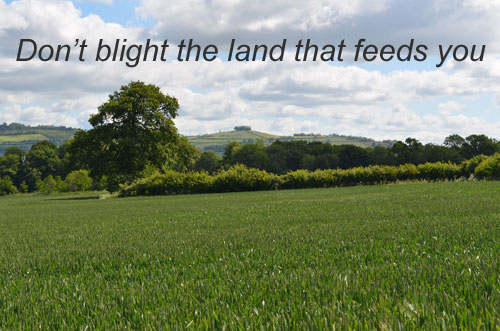
montage
Don't blight the land that feeds you!

BaNES Council has issued a press release announcing that the council had received more than 7,500 comments on the proposed options for future development needs across Bath and North East Somerset.

The Local Plan Options consultation gave people the opportunity to add their comments about where BaNES Council should plan for the delivery of new homes and jobs and what policies are needed for addressing the climate and ecological emergencies. The options were approved by the council's Cabinet earlier this year and "support the council's Corporate Strategy and Economic Strategy, which aim to deliver a fairer, more prosperous and sustainable economy."

A key objective for the Local Plan is to maximise the delivery of housing that is more affordable and the government's standard assessment suggests, according to BaNES Council, an estimated need for 14,500 additional homes up to 2042. Of those, more than 6,000 will be built on sites, mainly brownfield sites in Bath, which are already committed for development via planning permission or allocated in the current Local Plan.

Councillor Mathew McCabe, Cabinet Member for Built Environment and Sustainable Development, said: "We'd like to thank everyone who took the time to respond and comment on our proposed plans and policies. Although we had some software teething problems at the start, we received nearly 7,000 responses online. That's three times more than any previous planning consultation and in total is double the number of comments we have received for any of the previous planning policy consultations. The planning team will carefully consider the issues raised in the comments and feedback and they will help to shape the Draft Local Plan."

The council stated in its press release that it "will work closely with key stakeholders on the Draft Local Plan which will be produced and subject to full public consultation early next year giving residents another opportunity to have their say."

The Draft Local Plan will then be submitted to the Secretary of State and examined by an independent planning inspector. Once approved by the inspector, it will be adopted by the council. When adopted, the Local Plan will guide planning decisions until 2042.

SEG would like to thank every SEG member and resident of Saltford who submitted a robust response to the proposed development options in Saltford's precious Green Belt and in the landscape described by Saltford Parish Council (SPC) as "The Saltford Area of Great Landscape Value" (see our March 2024 news story Saltford's Green Belt is an Area of Great Landscape Value, says SPC).

The two proposals from BaNES, if finally approved for development, would result in a total of 1,300 new houses and a new school for West and South Saltford, i.e. on our local Green Belt landscape. The fact that more responses were received by BaNES Council than for any of the previous planning policy consultations suggests that the proposed options were found to be unsuitable and totally inappropriate by many people; the "software teething problems at the start" may hide a large number of responses that could have been lost in the process when responders assumed their responses had been accepted and logged, but the online IT system failed to do so. The full extent of that loss is likely to remain a mystery.

There are concerns in the village over technical and other issues with the online options consultation. SPC agreed at its April meeting that its Planning Policy Working Group would discuss this matter further, and that the Working Group would look to make recommendations for an item to be considered at SPC's May meeting (on 7th May) when it will also have discussed and recommended for resolution by the full SPC a formal complaint to the Chief Executive of BaNES Council about the council's management of SPC's request for a protective landscape designation for Saltford South.

SEG and our Green Belt Campaign Team will be keeping a watching brief on whether development options for Saltford's Green Belt go into the Draft Local Plan and provide guidance as necessary on how residents should respond in early 2025 to the next "opportunity to have their say".

Further developments on these key issues for Saltford will be published on our website ('Latest News' section) as they arise.

Return to top of page


Earth Day 2024: Planet vs. Plastics

April 2024

photograph

22nd April was Earth Day. This year's theme (at earthday.org) is the commitment to end plastics for the sake of human and planetary health, demanding a 60% reduction in the production of ALL plastics by 2040.

Planet vs. Plastics unites students, parents, businesses, governments, churches, unions, individuals, and NGOs in an unwavering commitment to call for the end of plastics for the sake of human and planetary health, demanding a 60% reduction in the production of plastics by 2040 and an ultimate goal of building a plastic-free future for generations to come.

"The word environment means what surrounds you. In the case of plastics we have become the product itself - it flows through our blood stream, adheres to our internal organs, and carries with it heavy metals known to cause cancer and disease. Now this once-thought amazing and useful product has become something else, and our health and that of all other living creatures hangs in the balance," said Kathleen Rogers, President of EARTHDAY.ORG. "The Planet vs. Plastics campaign is a call to arms, a demand that we act now to end the scourge of plastics and safeguard the health of every living being upon our planet."

#EarthDay

Return to top of page


2024 Big Garden Birdwatch results

April 2024

photograph

The results for the 2024 Big Garden Birdwatch held on the weekend of 26 - 28 January are now published by the RSPB. The top ten most commonly observed birds across the UK are listed below.

All 10 had no change on last year's position with the exception of the Great Tit (+1 at 7th) and Goldfinch (-1 at 8th) that swapped places. The list is (with UK Conservation Status listing in brackets):-

   1. House Sparrow (Red)
   2. Blue Tit (Green)
   3. Starling (Red)
   4. Woodpigeon (Amber)
   5. Blackbird (Green)
   6. Robin (Green)
   7. Great Tit (Green)
   8. Goldfinch (Green)
   9. Magpie (Green)
   10. Long-tailed tit (Green)

Top spot goes to the House Sparrow for the 21st year running despite a drastic decline in the UK over the past 50 years, so much is this decline that they are on the UK Red List for birds.

Over 610,000 people took part this year counting 9.7 million birds(!). More information on the results of the 2024 Birdwatch can be found on the RSPB website. You can also find more information on social media using the hashtag #BigGardenBirdWatch.

One way to help garden birds is by encouraging insects. Why not let a patch of your garden grow wild this spring and summer?

A full list of the 103 birds that are presently of regular occurrence in Saltford with ID links to the RSPB website for each species can be found on our Wildlife page >>

Return to top of page


Making Saltford a haven for pollinators

April 2024

photograph

We can help make Saltford a haven for pollinators including bees if we all do our bit and adopt some or most of the five actions from the UK's National Pollinator Strategy in the way we manage our gardens and public areas. These are:-

  1. Grow more nectar- and pollen-rich flowers, shrubs and trees.
  2. Leave patches of land to grow wild.
  3. Cut grass less often.*
    *Don't forget "No Mow May" for an area of your lawn where you can let wildlife thrive!
  4. Avoid disturbing or destroying nesting or hibernating insects.
  5. Think carefully about whether to use pesticides.

Insects pollinate, but by far the most effective pollinator is the honey bee. More information about bees and what you can do to help them can be found on our wildlife page from this link >>

photograph

In 2023 SEG helped set up Saltford4Nature, a small group of residents with the aim of starting to make the village's green areas simultaneously both more nature friendly and visually attractive.

If this is something that you would like to become involved with and/or for further details, please email Christine and Pat(rick) Brown of Saltford4Nature at saltford4nature@gmail.com.

Return to top of page


Recent promises to protect the Green Belt and villages in BaNES

March 2024

As our members are aware, SEG takes a politically neutral position and, in the interests of protecting the natural environment in and around Saltford, seeks to work in co-operation with representatives of the mainstream political parties that have been elected to represent our community at the national and local level.

In the May 2023 local elections, the Lib Dems retained control of BaNES Council and they also retained the two Saltford Ward seats. In the context of the forthcoming new Local Plan for the period 2022-2042 and the current Local Plan Options Consultation (until 16 April), the following are direct quotes from the May 2023 Lib Dems full manifesto (Ambitious for B&NES: A Positive Vision with the Liberal Democrats) :-

GREEN BELT

  • Maintain and develop green corridors within urban environments, protect the Green Belt from gratuitous or unwarranted development, and maintain other green and wildlife buffer zones between urban developments (p.10).
  • Preserve the Green Belt, allow for "green buffers" between urban developments, and develop "green corridors" that link green and open spaces forming a green urban network (p.32).

VILLAGES

  • We will: Commit to preserving the individuality and distinctive nature of our villages by not forcing allocations on villages but working with them to identify which villages want housing growth to address local need (except where land prices mean that housing built would be genuinely affordable to local residents) (p.30)*.

   *This is summarised on the Lib Dem website news story of 4 May 2023 "Our manifesto for 4 May 2023 elections" under the heading 'Affordable houses in the right places' as follows:-
   "In North East Somerset we will not force housing allocations on unwilling villages, our presumption will be that houses should be built close to jobs to reduce the length of journeys."

  • We will: Ensure developments come with the right infrastructure to support them (p.30)
  • We will: Ensure that the character and history of every location is reflected in any new developments (p.32).

HOMES

  • Our planning policies need to provide truly affordable homes for people to live in (p.23).
  • We will achieve our aims by: Building and enabling more social housing and truly affordable housing (p.28).
  • We will: Direct all house-building to areas of highest density employment to reduce the length of journeys needed, except where local communities identify housing need or where there are opportunities for genuinely affordable homes.(p.31)
  • We will support students and young people by: Ensuring that there is housing available for students and young people, with a focus on on-campus accommodation whilst ensuring HMOs are safe and of good quality* (p.31).

   *This is summarised on the Lib Dem website news story of 4 May 2023 "Our manifesto for 4 May 2023 elections" under the heading 'Affordable houses in the right places' as follows:-
   "In Bath we will build on brownfield sites to protect our greenbelt, making sure blocks of student flats are built on campus, so those brownfield sites can provide more affordable homes for local people. We will reduce the number of family homes being turned into HMOs and convert upper floors of city centre buildings to flats." (Note: HMOs = 'Houses in Multiple Occupation'.)

FOOD

  • We will...: Champion local food resilience, encouraging and optimising responsible local production and active land management practices to foster carbon sequestration (p.10).
  • We will: Look to support innovation regeneration and localisation in food production and farming. We recognise that the Climate Emergency and geo-politics are providing challenges to food equality, food quality, and our ability to feed ourselves (p.24).
  • We will: Ensure that green spaces, food growing opportunities and trees are planned into all proposals (p.32).

SEG takes the view that sustainable development needs to be the overarching objective for new housing developments. The SEG Local Plan Options consultation response, submitted to BaNES Council on 11th March, is along the same lines of the above promises. You can read the full text of SEG's response by clicking on this link (pdf opens in new window) :-

Don't forget to make your online response to the Local Plan options consultation from BaNES by no later than 5pm 16th April. SEG's guide for making an effective response to 1,300 houses on our Green Belt in the BaNES Local Plan was made available from our website news section in February; a printed copy was also delivered to each Saltford household.

Return to top of page


SPC meets local MP to discuss need to protect Saltford's Green Belt

March 2024

montage
Photograph courtesy of © Saltford Parish Council

On the afternoon of Friday 15th March, members of Saltford Parish Council's Planning Policy Working Group, Cllrs Jon Godfrey (SPC Chair), Phil Harding (Planning Chair), David Halton (SPC Vice-Chair) and Gary Graveling (Planning C'tee), met with Saltford's local MP, Sir Jacob Rees-Mogg at Saltford Hall.

As reported on SPC's website, the meeting, held at Saltford Hall, was requested by SPC following BaNES Council's dismissal of SPC's request originally made in January 2023 and reaffirmed by SPC in January 2024 for a landscape designation for Saltford's Green Belt south of the A4 Bath Road (originally referred to by SPC as 'Saltford South').

The meeting discussed the next steps available to SPC to achieve designated landscape protection for Saltford's Green Belt following BaNES Council's disappointing attitude towards protecting important landscapes in its area and in particular historic landscapes that are highly valued by the local community.

Actions available to SPC with regards to BaNES Council's dismissal of SPC's request for landscape protection were discussed, including options for SPC to appeal directly to the Secretary of State or to follow the Judicial Review process. Any actions with regards to these options would be resolved at a future SPC meeting at the time deemed appropriate in the Local Plan process by Parish Councillors.

SPC Councillors took the opportunity to express SPC's concerns to Sir Jacob about the significant negative impact of 1,300 residences proposed for Saltford in the BaNES Local Plan Options Consultation (800 at 'South Saltford' and 500 at 'West Saltford'). This included that, should 'West Saltford' be developed as proposed in the Local Plan Options consultation, the Green Belt between Saltford and Curo's Withies Green development in Keynsham would measure just 160 metres.

SEG welcomes SPC's strong commitment to protecting Saltford's Green Belt and is grateful that Sir Jacob Rees-Mogg came to Saltford to meet and discuss in detail the options for securing its longer-term protection and gave a promise to make representations to the Planning Inspector on SPC's behalf at the appropriate time in the Local Plan timetable.

More information about the meeting can be found on SPC's website from this link.

Return to top of page


SEG asks BaNES to comply with Government policy on the Green Belt! (Local Plan consultation response)

March 2024

montage

On 11th March SEG's Executive Committee submitted its online response to the BaNES Council Local Plan Options Consultation. Within its detailed response SEG said :-

   "On behalf of the strongly expressed wishes of the local community and the 560+ members we represent, Saltford Environment Group implores B&NES Council to comply with the spirit and intent of national planning and environmental policies (i.e. NPPF and EPPS) by protecting the Green Belt in Bath and NE Somerset, and in particular around Saltford that is gradually becoming the last remaining green open space on the Bath Road A4 corridor between Bristol and Bath."

SEG provided a "Strongly Object" response to the options for West Saltford, South Saltford, SE Keynsham and a qualified "Partially Object" response for the North Keynsham development option.

SEG also submitted comments on the South of Burnett (next to A39) potential site for which SEG has serious concerns about the negative impacts of that future potential option, "Partially Object" responses with comments on the "Keynsham and Saltford: Area overview" and the "Transport Opportunities" sections and a detailed response to the "Green Belt" development management policy options section of the consultation.

SEG asked BaNES Council, as our Local Planning Authority, to accept and implement Saltford Parish Council's landscape designation request for Saltford's Green Belt submitted in January 2023, reaffirmed in January 2024, and further explained by letter from SPC to the BaNES Cabinet in February 2024. This request was for Saltford's Green Belt area south of the Bath Road A4.

You can read the full text of SEG's response by clicking on this link (pdf opens in new window) :-

The consultation period ends at 5pm on 16th April (deadline was 8th April but then extended after technical issues with online responses were resolved). SEG's guide (issued in February) shows you how to make an effective response concerning the south and west Saltford options.

Return to top of page


SPC resolves its response to BaNES Local Plan Options Consultation

March 2024

At its meeting on 5th March, Saltford Parish Council SPC resolved a 'Strongly Object' response to proposals at South Saltford and West Saltford in the BaNES Local Plan Options Consultation. The resolved response included robust and detailed comments for proposals at 'South Saltford' (800 residences + primary school) and 'West Saltford' (500 houses + primary school) to support SPC's 'Strongly Object' stance to those proposed options.

SPC also resolved responses to other proposals and policy aspects of the consultation:-

  • South of Burnett, next to A39 (potential site) [Comment];
  • Keynsham and Saltford - Area overview [Partially Object];
  • Transport opportunities [Partially Object];
  • North Keynsham [Partially Object];
  • SE Keynsham [Strongly Object]
  • Green Belt [Option (B) with Comment].

In addition to SEG's response guidance, residents might also like to see SPC's response for further points they might wish to make in their own response. SEG strongly advises support for SPC's landscape designation request for the area of Saltford south of the Bath Road A4 in consultation responses, e.g. for responses to the Section "Keynsham and Saltford: Area overview".

SPC's website provides further information and a copy of the full SPC response which can be found from this link to the SPC website >>

Alternatively you can download SPC's response as a pdf directly from the SPC website from this link:- SPC response pdf.

The consultation period ends at 5pm on 16th April (deadline was 8th April but then extended after technical issues with online responses were resolved). SEG's guide shows you how to make an effective response.

Return to top of page


Saltford's Green Belt is an Area of Great Landscape Value, says SPC

March 2024

photograph

At Saltford Parish Council's meeting on 5th March, it resolved to adopt as a planning policy document its new paper "The Saltford Area of Great Landscape Value - Planning Policy and Character Appraisal by Saltford Parish Council".

SPC agreed that this new Saltford Area of Great Landscape Value paper would serve as a reference document for SPC planning policy purposes, specifically in relation to future proposals that may affect or seek to develop Saltford's Green Belt landscape area. Saltford Parish Council, in describing Saltford's landscape setting as an Area of Great Landscape Value, seeks to provide information and data that offers planners and developers a greater insight of this landscape's high quality and value to the community.

SPC makes the point in its paper that the support and recognition of Saltford's Local Planning Authority, BaNES Council, for a landscape designation, through either an AGLV or NE2a (Landscape Setting of Settlements) designation, would provide reassurance to the community of Saltford and neighbouring parishes that the Local Planning Authority values this landscape as much as the community it seeks to represent and will protect it from development.

ENDORSEMENTS

The community's great value that it puts on the local landscape both for the health and wellbeing of the community and for the important habitat it provides for wildlife, is demonstrated by the endorsement of the paper by Saltford Community Association, St Mary's Parochial Church Council and Saltford Environment Group. Furthermore, the Avon & Bristol Branch of the CPRE (Campaign for the Preservation of Rural England) has endorsed the paper too.

In confirming the CPRE's endorsement the Area Director said that "this is a comprehensive and rigorous report. In the context of the ecological and climate emergency declared by BaNES, a community led approach to character appraisal such as this should be applauded. ...CPRE local area branch endorses the aims and objectives of the document and the importance of protecting from development Saltford's Green Belt landscape surrounding the village."

PHOTOGRAPHIC RECORD

As a stand alone document but also to complement the "The Saltford Area of Great Landscape Value" paper, at its 5th March meeting SPC also resolved to adopt as a SPC document "Saltford's Area of Great Landscape Value - A Photographic Record". The collection of photographs it contains provides a snapshot and will become a historical record of the rural countryside setting that the Green Belt surrounding Saltford's housing boundary provides at the present time.

FURTHER INFORMATION (& SEE THE NEW DOCUMENTS)

Further information about these important new documents and the documents themselves can be found on SPC's website from this link >>.

As these documents are of significant importance to the community whilst forming a historical record, SEG has also archived and made available copies of both papers in SEG's History of Saltford Project - Document Library.

Return to top of page


Map reveals potential urban sprawl from Bristol to Saltford & further information (incl. "Should Saltford take more housing..?")

March 2024

map

This map from BaNES Council shows the Local Plan (2022-2042) site options under consideration for the Hicks Gate, Keynsham and Saltford area (Saltford is on the bottom right corner of the map).

No decision has yet been taken as to which options will be taken forward for development to the Draft Plan stage. It is therefore important that Saltford residents submit effective responses to the options consultation - see our February news story "Objection reasons for 1,300 new houses in Saltford..." for guidance from SEG on how to make an effective response.

Following the drop-in event organised by BaNES Council in Saltford Hall on 29th February, BaNES Council has shared the following PDFs, that were displayed as panels:

- Welcome, How to Participate, Housing Need and Strategic Development, & Development Management Policies
- Keynsham and Saltford
- South of Burnett
- Transport (inc. Keynsham and Saltford)

These can be found on SPC's website from this link >>

SHOULD SALTFORD TAKE MORE HOUSING..?

Response comment by SEG's Chair, Phil Harding, to those who think that Saltford should take new housing to share the load.

   Saltford has more than doubled in size since 1950*. Keynsham is fully developed too and, like Saltford, its roads are choked with traffic during peak periods. The new jobs will be in Bath, not Saltford.

   New homes need to be built on brownfield sites, not the Green Belt, to protect nature during the ecological emergency and to protect the UK's future food security.

   The UK, the 3rd most densely populated country in Europe, cannot feed itself now (40% of the nation's net food consumption is imported) and cannot rely on other countries feeding us at such a high proportion in the future against a background of climate change, conflicts and population growth.

   To destroy green field sites for development is irresponsible and short sighted. If we need more housing, especially affordable housing, a Garden City approach** would be much more sustainable than constantly reducing and eventually ruining the quality of life for existing communities through over-development.

   Short term planning solutions just cause medium to long term problems. As Sir David Attenborough said "Can a growing human population leave space for wildlife?"

*Saltford grew by a massive 114% from 1951 (pop. 1928) to 2021 (pop. 4133) - Census data.
**A Garden City approach is where retail, employment, education, healthcare and leisure facilities are within easy reach of homes and main transport links, preferably rail, to other large towns and cities.

Return to top of page


Annual Saltford Dawn Chorus Walk, 28th April

February 2024

photograph

The annual Dawn Chorus Walk in Saltford will be held again this year.

The Keynsham Branch of the Avon Wildlife Trust will be listening to, and watching, the birds get up after a night's roosting for this year's Dawn Chorus Walk on Sunday 28th April 4.30am - 8.00am, starting at Saltford Shallows car park.

photograph
A Saltford Wren - a small bird with a loud song!

This is a great way to learn how to identify from their songs the many birds that are found in Saltford. Songs of all common species will be pointed out and their identification features clarified. The walk will be along part of the railway path cycle track (and back). Wrap up warm as it can be very cold that early. Binoculars and a bird identification guide will be helpful for once it gets light. Above all you need good ears to be able to pick out the 30+ different species the annual walk normally finds! A flask of your favourite hot beverage is recommended.

This event is free but an optional donation of £1 or £2 to support Avon Wildlife Trust funds is suggested.

For further information and to confirm your attendance, contact Dave Sage on mobile 07899--716068 the week before the event.

Return to top of page


Objection reasons for 1,300 new houses in Saltford's Green Belt!

February 2024
(last updated 19.3.2024)

montage
Don't lose our Green Belt!

SEG's guide on how residents can make an effective response to the two Saltford options in the BaNES Local Plan Options Consultation is now available here on our website.

If the two Saltford options are put into the new Local Plan for 2022-2042, they would add 1,300 houses and a new school on our Green Belt.

The options under consideration are Saltford West (500 houses) adjacent to Grange Road and South Saltford (800 houses) adjacent to Montague Road, Manor Road. A new primary school would accompany either or both options.

You can download the 2-page SEG guide here:-

PLEASE NOTE : When submitting your online response you may need to 'click' on the submit button TWICE for each section response before the system accepts your response and issues a unique reference no. for your response. After clicking the first time you are advised to wait and see what happens (the page should 'refresh' itself and show your unique reference no. at the end of the page). Furthermore, if you don't receive a confirmation email from BaNES, that may mean it has not logged your response and you will need to submit it again(!).

You can download a document with maps for the two Saltford options in the consultation, West Saltford (500 houses) & South Saltford (800 houses), here:-

Printed copies of the SEG guide are also available from the Saltford Community Library & Post Office. The guide has been endorsed by our BaNES Saltford Ward Councillors, Cllr Duncan Hounsell and Cllr Alison Streatfeild-James.

BaNES Council has arranged a drop-in exhibition for Saltford on Thursday 29th February from 3pm to 7pm at Saltford Hall (see exhibition panels content in 4.3.2024 UPDATE below). Views expressed at the exhibition will NOT form part of the formal consultation. You might like to attend the drop-in exhibition before making your response, but whatever you do, make sure you make your response to BaNES so that it is received before 5pm on 16th April (deadline was 8th April but then extended after technical issues with online response resolved). Printed copies of SEG's guide will be available there too.

VIDEO

A helpful Options Consultation video for Keynsham and Saltford can be found on B&NES Council's YouTube channel >>

UPDATE 4.3.2024 - EXHIBITION PANELS

BaNES Council has shared the following PDFs, that were displayed as panels at the Options Consultation 'drop-in' event at Saltford Hall on Thursday 29 February:
- Welcome, How to Participate, Housing Need and Strategic Development, & Development Management Policies
- Keynsham and Saltford
- South of Burnett
- Transport (inc. Keynsham and Saltford)

These can be found on SPC's website from this link >>

This is your opportunity to help defend the Green Belt from inappropriate development. Remember, responses need to be based on planning reasons for them to have an effect. SEG's guide is to help you do that.

Return to top of page


B&NES Council launches Local Plan Options Consultation

February 2024

On the afternoon of 12th February B&NES Council launched the Local Plan Options Consultation. Responses can only be made online via a dedicated webpage for that purpose; the 8-week consultation period runs until 5pm on 8th April.

Before you submit your own response, e.g. to give your reasons why the options to develop parcels of Saltford's Green Belt with new housing developments are totally inappropriate and undermine the purposes of the Green Belt, you are advised to wait for SEG to publish guidance on making an effective response. We aim to publish that advice here on this web page within days and well before the consultation deadline.

B&NES is arranging drop-in exhibitions where you can find out more. There will be display boards, and planning and highways officers in attendance. We understand that views expressed at the exhibition will NOT form part of the formal consultation.

The event scheduled for Saltford will be held on Thursday 29th February from 3pm to 7pm at Saltford Hall; SEG will be present and hand out leaflets on how to respond to the inappropriate proposals. The Keynsham drop-in exhibition event will be at Keynsham Community Space on 22nd February (3pm - 7pm).

Link to the consultation on B&NES website:-

bathnes.gov.uk/
localplanoptions

Saltford Parish Council has announced it will resolve its response to the consultation at its 5th March meeting.

Return to top of page


SPC takes firm line responding to B&NES Council on landscape designation request

February 2024 (updated April 2024)

photograph

SEG is very supportive of the strong line Saltford Parish Council has taken in responding to B&NES Council following its rejection of the Parish Council's bid for landscape protection at 'Saltford South', requesting that B&NES Council reconsiders the basis of its views and decision. The response was resolved at SPC's meeting on 6th February and sent the next day.

This was such a robust response making a clear case for protecting the landscapes and their wildlife habitat that are valued by local communities that we are reproducing the text in full. This is so that members of the community can see and understand the case made on their behalf. SPC said in its response:-

   On behalf of the local community that we represent, Saltford Parish Council (SPC) is disappointed that the bid has seemingly been rejected by B&NES Council at this early stage in the Local Plan drafting stage. It appears that no formal criteria and decision-making process within B&NES Council for reaching that decision has been used, which SPC considers to be a matter of great concern.

   It is evident that B&NES Council does not have a formal process for Parish Councils to apply for a landscape designation in the Local Plan process where a community places great value on the natural, historic and environmental attributes of a local landscape, despite the requirements of the NPPF (version December 2023, paragraph 180) that planning policies and decisions should contribute to and enhance the natural and local environment including protecting and enhancing valued landscapes.

   In the absence of that formal application process, SPC would have appreciated greater consideration of its detailed application, submitted in January 2023 and reaffirmed in January 2024, and the opportunity to discuss it properly. Instead, it was dismissed, almost as an aside, at a meeting with your planning officers in November 2023 and then confirmed by your email of 25th January after SPC submitted a reaffirmation of its request. No opportunity has been given for SPC to receive a fair hearing by B&NES Council. SPC appreciates that B&NES Council has a significant administrative task in delivering a new Local Plan, but that is not a reason to dismiss serious and locally important applications for landscape designations, such as that submitted by SPC.

   Each application that may arise should be examined on its merit if B&NES Council genuinely wants to protect nature, the local environment and the individual character of the settlements within its area. Perhaps if B&NES Council did have a formal application process, it would be less nervous about allowing Parish Councils to have the temerity to ask it to protect landscapes that contain natural habitats and green open spaces that are greatly valued by the local community.

   To inform SPC that the B&NES Council decision to reject its landscape designation request is based on the 2017 Placemaking Plan, when landscape designations were last assessed, is an inappropriate means of determining landscape value in 2024.

   The 2017 Placemaking Plan, in itself, does not have the force of law. It is an 'intentions document' and, as such, recognises that many of the data upon which such plans might be made will become quickly redundant. What the 2017 Placemaking Plan did not change, however, is the Housing Development Boundary surrounding Saltford. The plan stated, "Saltford Village meets the criteria of a Policy RA1 settlement. Housing development can come forward within the Housing Development Boundary (HDB). However, opportunities outside the HDB are limited and will be considered in the context of Green Belt Policy. There are currently no exceptional circumstances to change the Green Belt boundary to enable housing to come forward" (Vol. 5, paragraph 133, page 39). Nowhere in the Placemaking Plan does it state that AGLV (or similar) proposals would not be allowed to be considered by council members. There is therefore no basis for its rejection.

   Since 2017, the loss of parcels of open landscape to new or forthcoming developments between Keynsham and Saltford, for example the Hygge Park, Withies Green, and Pixash Lane Recycling Centre expansion developments, means that the remaining green open landscape and in particular the Green Belt surrounding Saltford is now of even greater value to the local community and to wildlife. Its value has been amplified greatly since 2017, not diminished, yet our Local Planning Authority is unwilling to recognise that its own planning policy decisions that have led to so much loss of green open spaces has had such an effect.

   That increase in value since 2017 means that all of the remaining Green Belt surrounding Saltford's housing area, i.e. Saltford South and Saltford North which contains important wildlife habit and green open spaces with PROW footpaths, should be granted "NE2A Landscape Setting of Settlements" status, or similar, to reflect that reality.

   Saltford North was not included in SPC's landscape designation request as it already has several protections (e.g. River Avon SNCI, flood plain, Conservation Area setting, SSSI, Anglo Saxon Burial Ground, CAA regulations re. safeguarding Saltford Airfield, Cotswolds National Landscape proximity).

   However, in view of B&NES Council's disappointing attitude towards protecting important landscapes, SPC will now consider whether to expand the original request whilst considering other means of achieving protection in the absence of support from our Local Planning Authority. SPC obviously reserves the right to appeal to the Secretary of State.

   Furthermore, as SPC made clear in its reaffirmation paper, the Environment Act 2021 and its Environmental Principles Policy Statement (EPPS) from 1st November 2023 puts an even greater emphasis on the natural environment in the NPPF. In announcing the latest update of the NPPF on 19th December 2023, Secretary of State Michael Gove said: "England's cities are already less dense than those of most of our European neighbours. That is environmentally wasteful and economically inefficient. We seek to support the gentle densification of urban areas in preference to the erosion of Green Belt land. That is why the Government is ensuring it is clear there is generally no requirement on local authorities to review or alter Green Belt boundaries if this would be the only way to meet housing need." SPC is asking and imploring B&NES Council to comply with the spirit and intent of national planning and environmental policies.

   Despite this disagreement with our Local Planning Authority on such an important matter for the community that we represent, SPC will, of course, continue to engage with the Local Plan options and drafting consultation process.

   The draft Local Plan stage, when B&NES Council will confirm its position in respect of the landscape around Saltford, seems too late in the process, irreversible decisions may have been made, so it is important that dialogue between B&NES Council Planners and SPC Councillors continues before then.

   Indeed, we note your comment that for "the landscape setting defined for Saltford, the question will be posed in the Options Document as to whether stakeholders agree with the current designation, or whether they consider that the designation should be changed." SPC hopes you will listen to the real stakeholders in local landscapes, the local community, and not vested interests who merely see an opportunity for short-term financial gain, then leave the community to live with the consequences of inappropriate development. Our landscapes are an intrinsic part of our heritage and the reason why people live where they do.

~ ~

It was also resolved at SPC's 6th February meeting to urgently seek the support of Sir Jacob Rees-Mogg MP regarding the Parish Council's request for landscape designation at 'Saltford South'. SPC has since requested a meeting with Sir Jacob and members of its Local Plan Working Group. The Working Group's members are Cllr Phil Harding (Planning Chair), Cllr Jon Godfrey (SPC Chair), Cllr David Halton (Vice Chair), and Cllr Gary Graveling.

This is reported on SPC's website; the news item can be found from this link:- SPC - landscape designation response.

BACKGROUND INFORMATION

Landscape Designation Request for Saltford South of the A4
To read the original case submitted by SPC in January 2023 and the reaffirmation paper approved and submitted in January 2024, click on the links below :-

  • SPC's January 2024 reaffirmation to B&NES Council of its original January 2023 request for a 'Saltford South' designated landscape protection can be found on the SPC website via this link >>.
  • The original landscape designation request documents for Saltford South made in January 2023 can also be found on the Saltford Parish Council (SPC) website via this link >>.

Return to top of page


Public statement from SEG on the Local Plan options totalling 1,300 houses in Saltford's Green Belt

January 2024

photograph

The following is a public statement by SEG responding to the inappropriate Local Plan options to build on Saltford's Green Belt. It is from the speech given by our Chair, Phil Harding, at the packed public meeting held in Saltford Hall on the evening of Friday 26th January.

Most of us want the same from the new Local Plan: protection of green open spaces, protection of agricultural land and protection of natural habitats to assist recovery from the ecological emergency, and new affordable homes in the right places.

The task of defending Saltford's Green Belt from the new Local Plan process seems daunting. However, in 2013 our community stopped Crest Nicholson's appeal to get planning permission to build 99 homes on our Green Belt south of Manor Road.

In the run up to the 4-day appeal inquiry in August 2013, several people in the village told me we would never win, some said "why bother?". Well, we knew our case was right, and we won.

The Secretary of State called in the Inquiry decision and in March 2014 dismissed the appeal by Crest Nicholson. I fully agree with the Secretary of State's reasoning for dismissing the appeal, he gave the same reasons SEG had submitted and represented as evidence to the Inquiry.

The Secretary of State in reaching his decision said this would be "an unacceptable reduction of the Green Belt in that area" and gave national planning policy reasons for his decision. These included harm to the Green Belt's openness, and its purpose of preventing encroachment into the countryside for which he said the proposed development would represent considerable harm. There are no new exceptional circumstances to suggest the situation has changed.

Usefully, legislative help in our favour has recently arrived on the scene. The Government's new Environmental Protection Policy Statement came into effect last November under the Environment Act 2021. It explicitly strengthens the policy case for protecting the natural environment from the effects of human activity and supports the maintenance, restoration or enhancement of the natural environment.

This secondary legislation specifically covers "national policy statements, strategies and frameworks". Thus, it covers the National Planning Policy Framework, known as the NPPF, from which Local Planning Authorities like BANES are required to produce Local Plans. So, each new or revised Local Plan has to comply with the new Environmental Protection Policy Statement.

Our Ward Councillors, the Parish Council and SEG are collectively determined to protect the Green Belt. I hope and I am sure most of Saltford's residents feel the same.

If we as a community don't make a strong case to stop inappropriate development, piece by piece Saltford will become a town, lose its rural village status and will be consumed within a continuous urban sprawl from Bristol.

The green open landscape of our precious Green Belt will be lost forever, and wildlife will lose important habitat that cannot be replaced in a short or medium timescale.

Saltford South provides support for endangered wild bird species. That is 20 red-listed species including Merlin, Mistle Thrush, Redpoll, Skylark, Spotted Flycatcher, and Woodcock, and 26 amber-listed species including Kestrel, Reed Bunting, Sedge Warbler, Snipe, Song Thrush, Sparrowhawk, Tawny Owl, Whitethroat, and Willow Warbler, as well as other spectacular bird species that may also become endangered if habitats continue to be lost.

It is not Saltford's turn or duty to take even more houses. Saltford's population has grown by a significant 36% since 1961, and a massive 114% since 1951. The point where enough is enough has been met.

There are other reasons why our Green Belt should be protected. Here are just three key reasons:-

   Firstly, 81% of BANES is farmland compared to a UK figure of 71%. So, BANES does and can make a useful contribution to the nation's food production at a time when the UK depends on importing a massive 40% of its net food requirements. We cannot rely on other countries to make such a high contribution to our food needs in the future against a background of a growing world population and climate change. To destroy our countryside is irresponsible. How will the generations that follow us be fed securely and affordably if the countryside is constantly depleted? Don't blight the land that feeds you.

   Secondly, Traffic congestion results in economic loss and lowers the quality of life for residents. The cumulative effect of new housing in Keynsham and South Gloucestershire etc. is already causing serious traffic congestion during morning and early evening peak times not just in Keynsham, but through Saltford. Our local roads can't take new housing developments.

   Thirdly, Building on open countryside in the Green Belt reduces the quality of life for rural and city dwellers alike. The countryside is important for our mental and physical well-being. We want to protect the Green Belt not just for ourselves and for wildlife, but for those who live in local towns and cities and appreciate being able to get out of town and into open countryside relatively quickly.

To build new housing developments on Saltford's Green Belt would not be sustainable development by any stretch of the imagination and would be contrary to any rational interpretation of Government planning and environmental policies.

After the Local Plan consultation is launched by BANES on 12th February, SEG aims to provide guidance to Saltford's residents on how to submit effective responses. So, keep a watch on SEG's website and if you are on Facebook, follow SEG's page there where we have over 1,000 followers and will post high profile news items on the consultation. SEG's Green Belt Campaign Team is ready to spring into action as necessary.

Local landscapes belong to local communities - they are an intrinsic part of our heritage and the reason why we live where we do. To give longer term protection of our Green Belt, the Parish Council's formal request for a landscape designation for Saltford South in the draft Local Plan is important and strongly supported by SEG. To succeed, that request will need the support of residents too.

Return to top of page


Shock at 1,300 houses on Saltford's Green Belt in Local Plan "options"

January 2024 (amended April 2024)

map image
map image

The new BANES Local Plan for the area will include a new strategy and policies to guide and manage growth, development and change in the city, towns and villages over the next 18 years, i.e. for the period 2022-2042.

On 1st February at a "Special Meeting", the BANES Cabinet will be asked to approve the public consultation in February/March for land parcel options for development. The papers for that meeting were published on 24th January and the consultation is planned to run from c.12th February.

As can be seen from the maps above, two large areas of Saltford's Green Belt have been identified and proposed for consideration:-

  • "West Saltford", 500 houses adjacent to Grange Road, and
  • "South Saltford", 800 houses and a village shop adjacent to Montague Road and Manor Road

Each option includes a new school.

The Cabinet Meeting papers can be found on the BANES website from this link >>


Public meeting in Saltford

To provide more information about this important issue, there will be a public meeting in Saltford Hall on Friday 26th January at 7pm.

This information sharing event has been organised by our Ward Councillors and will be independently chaired. Speakers will be:

Cllr Jon Godfrey (Chair, Saltford Parish Council)
Cllr Phil Harding (Chair of Planning, SPC, but speaking as SEG Chair at this event)
Cllr Matt McCabe (BANES Cabinet Member - Planning)
Cllr Duncan Hounsell (Ward Councillor)
Cllr Alison Streatfeild-James (Ward Councillor)

You are encouraged to attend the meeting - bring your neighbour too - to show your support to SEG and others in resisting the inappropriate development of Saltford's Green Belt.

Unsurprisingly, SEG is strongly opposed to development of either of the two Saltford options. There are very good planning, environmental, transport, and other reasons to show they are totally inappropriate and would be highly damaging, not just for Saltford, but also the wider area.

Our Ward Councillors, Cllr Duncan Hounsell and Cllr Alison Streatfield-James, have issued a joint statement about the proposals:-

   "We are opposed to the large-scale housing options proposed at Saltford. We will fulfil our election promise to work to protect the Green Belt at Saltford. These options are ones suggested by the planning department about where housing could go not should go. There are many planning reasons why the options at Saltford should not be used to meet the wider area's future housing needs. Saltford is a large rural village. These options would change the essential character of Saltford."

WHAT NEXT?

To assist residents in making effective responses to the 12th February - 25th March 6-week consultation, SEG will provide advice and guidance on our website. The Secretary of State's reasons in 2014 for opposing 99 new houses on Saltford's Green Belt south of Manor Road apply equally, if not more so, today as they did ten years ago. So, watch this website & follow SEG on Facebook!


Don't let this be the end of Saltford as a rural Somerset village.


FURTHER INFORMATION

Landscape Designation Request for Saltford South of the A4
To read the original case submitted by SPC in January 2023 and the reaffirmation paper approved and submitted in January 2024, click on the links below :-

  • SPC's January 2024 reaffirmation to B&NES Council of its original January 2023 request for a 'Saltford South' designated landscape protection can be found on the SPC website via this link >>.
  • The original landscape designation request documents for Saltford South made in January 2023 can also be found on the Saltford Parish Council (SPC) website via this link >>.

Local Plan
The main BANES web page about the draft Local Plan is at this link >>

BANES Local Plan timetable
Subject to adjustment when/if slippage occurs, this is at this link >>

Return to top of page


Local Plan: SPC reaffirms its Saltford South landscape designation bid

January 2024 (amended April 2024)

photograph

At its monthly meeting on the evening of 9th January, Saltford Parish Council unanimously voted to submit a detailed paper to B&NES Council 'Landscape Designation for Saltford South: Reaffirmation of application with outcome options' and to share the paper in the public domain for wider awareness. The SPC announcement can be found on its website from this link >>

The paper, prepared by SPC's Local Plan Working Group, asks B&NES Council to provide information that would enable SPC to understand why the Council allegedly does not accept the AGLV (Area of Great Landscape Value) landscape designation bid submitted by SPC in January 2023 and asks "to be provided with appropriate minutes of Council meetings to elucidate the process by which that decision was made as well as the ciriteria used to underpin that decision."

The paper also states that "to fail to provide a landscape designation to Saltford South would be a contravention by the Local Planning Authority (i.e. B&NES Council) of the spirit and intent of national planning policies and the over-arching legislation (EA 2021 and the EPPS 2023)."

The reaffirmation paper provides both an update on a new legal duty under the Environment Act 2021 and other policies that have emerged since the original bid in January 2023, and provides outcome options for the Saltford South landscape resolved by SPC at its 9th January 2024 meeting. It also provides the planning context, that has already been assessed by the Secretary of State, and compliance.

SPC has provided B&NES Council with three options that would be acceptable to the Parish Council and these are detailed in the paper that can be downloaded here as a pdf:-

The original landscape designation request documents for Saltford South made in January 2023 can be found on the Saltford Parish Council (SPC) website via this link >>.

SEG fully supports this robust approach taken by SPC and the reaffirmation case made for securing Saltford's valuable landscape for nature and for existing and future generations.

As SEG has said previously, local landscapes belong to local communities - they are an intrinsic part of our heritage and the reason why we live where we do. Local Planning Authorities have a duty to respond positively to the wishes of communities that value their local green spaces, especially at a time of heightened concerns about the ecological and climate emergencies.

WHAT NEXT?

The Local Plan 2022-2042 Options document is due to be considered by the B&NES Council Cabinet on 1st February for approval for public consultation during February/March. The options are likely to become known from 24th January when the papers for the 1st February Cabinet meeting are published online by B&NES Council.

Saltford's Ward Councillors are to hold a public meeting 26th January, 7pm at Saltford Hall.

SEG will keep members updated via our website, facebook page, and ad-hoc newsletters. SEG will provide information on how to respond to the public consultation so that we can make sure Saltford's voice is heard and our Green Belt protected.

FURTHER INFORMATION

The new Local Plan for the area will include a new strategy and policies to guide and manage growth, development and change in the city, towns and villages over the next 18 years, i.e. for the period 2022-2042.

The main B&NES web page about the draft Local Plan is at this link >>

The B&NES Local Plan timetable (subject to adjustment when/if slippage occurs) is at this link >>

Return to top of page


Big Garden Birdwatch 26 - 28 Jan

January 2024

photograph

Big Garden Birdwatch is for everyone, whether you're a complete beginner or a birding expert. Simply count the birds you see in your garden, from your balcony or in your local park for one hour between 26 and 28 January 2023.

  • Choose an hour between 26 and 28 January
  • Only record the birds that land in your patch
  • Record the highest number of each bird species you see at any one time

Taking part is easy and this is a great chance to sit back, relax and watch birds and other wildlife for an hour - and to encourage younger members of your family to develop an interest in the local wildlife. By taking part, you'll find out all about the fascinating wildlife that flutters, crawls and hops in your garden, balcony or local area. And with a simple hour of mindful watching, you could have an hour to yourself, too.

Full details including resources and ideas with tips on making your garden an attractive place for birds to visit can be found on the RSPB website from this link:- RSPB Birdwatch.

You can also find more information on social media using the hashtag #BigGardenBirdWatch.

Don't forget that taking a wildlife-friendly gardening approach, including the provision of water, rather than putting out copious amounts of bird food, is much more beneficial to birds and other wildlife as it helps to re-introduce the natural features that are much reduced due to habitat loss and intensive farming methods. It can be a more helpful approach than disrupting or unbalancing different bird populations through heavy food provision that favours some species over others. Growing native species of plants in your garden, mowing your lawn less, and not removing dead leaves etc. from your flower beds in the autumn and winter that provide winter habitat and a food source for insects, can help sustain a healthier local birdlife.

Return to top of page


button

© Saltford Environment Group
W3C compliant website

Editorial policy

SEG as an independent, non-profit making body takes a politically neutral stance. We are committed to the highest editorial and ethical standards in the provision of all the content and related services for our website.


The Editor is Phil Harding (SEG Chairman) and Phil can be contacted via our home page.